

This article is for informational purposes only. Always verify information independently before making any decisions.
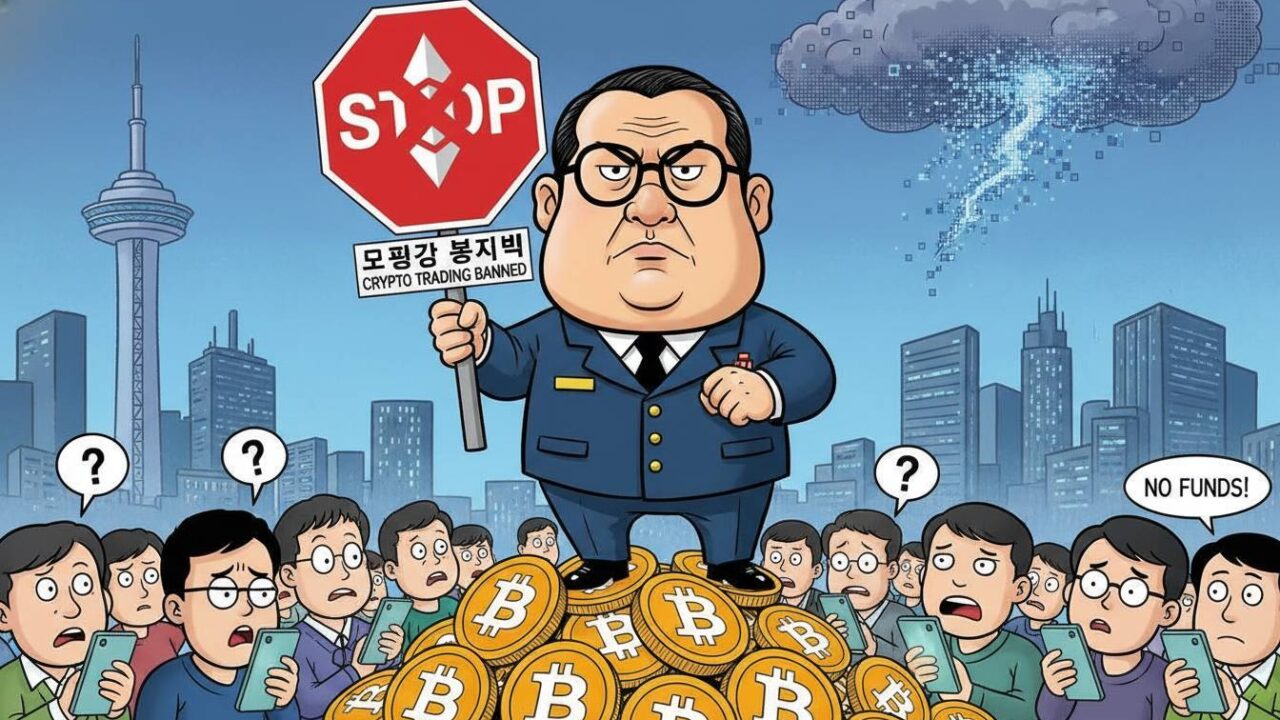
South Korea may ban its planned 22% Crypto tax, set for January 2027, as investor backlash escalates and public opposition gains momentum. An official petition to halt the law surpassed 50,000 signatures within two weeks, spotlighting intense pressure on lawmakers to respond to concerns about innovation, fairness, and investor protection. That figure — more than 50,000 signatures — represents a rare threshold that triggers National Assembly review under Korean public demand procedures.
Policymakers now face urgent debates about whether to proceed, revise, or fully withdraw the controversial digital asset capital gains tax. Political parties are being forced to re-examine their positions ahead of high-stakes parliamentary sessions. Crypto investors and industry groups are increasing demands for regulatory clarity and relief from what they call a punitive tax rate. Legislators must act under the shadow of deepening public dissatisfaction and warnings about capital flight, making the 22% levy a polarising issue for both voters and businesses.
- Proposed 22% crypto tax:South Korea’s government plans a 22% tax on digital asset gains above 2.5 million won starting January 2027, per Smallworldfs.com.
- Climbing investor backlash:According to Gncrypto.news, a petition to scrap the tax exceeded 50,000 signatures in less than two weeks, forcing a formal policy review.
- Policy review now in play:Lawmakers are debating whether to delay, revise, or completely cancel the tax amid concerns related to capital flight, innovation, and parity with stock taxes, per Koreatimes.co.kr.
- Industry and retail pushback:Digital asset advocacy groups and retail traders have warned that this tax punishes local innovators and could drive talent and capital offshore, according to Cryptobreaking.com.
- Outcome still unknown:Sustained public pressure and upcoming elections have made the fate of the 22% tax unpredictable, leaving markets in suspense.
- See more analysis: South Korea May Ban Planned 22% Crypto Tax After Investor Backlash Grows articles
- For additional coverage or comment, contact our team on South Korea May Ban Planned 22% Crypto Tax After Investor Backlash Grows
Search Crypto News
The petition’s rapid rise in opposition highlights anxiety among an estimated 6 million domestic crypto investors, most of whom entered the market since 2021.
Both the ruling party and the opposition are being pressed by crypto users, fintech entrepreneurs. Youth advocacy groups to clarify their intentions ahead of the upcoming National Assembly session in June 2026.
Featured Crypto News
The controversial tax was first scheduled for January 2025, then postponed twice—eventually to January 2027—following repeated protests from investors and startup founders. The law would apply a 22% capital gains rate to annual profits above 2.5 million won, which is significantly lower than the exemptions granted to stock market investors.
Advocates for the tax say it targets only those with meaningful profits, capturing the wealth generated from crypto trading booms since 2021. That 2.5 million won threshold — roughly $1,850 — is too low to protect everyday investors, opponents argue, unlike equities markets that enjoy higher exemptions. Repeated postponements have created further uncertainty, frustrating both sides, according to gncrypto.news.
Latest News
As of May 2026, the fate of the 22% crypto tax remains deeply undecided. Both the ruling People Power Party and the main opposition have signaled possible revisions to the structure and timeline, acknowledging growing resistance across the country. Lawmaker flexibility now matches the pressure coming from public petitions and the crypto industry. Intensifying debate has boosted policy uncertainty for retail and institutional investors hoping for unmistakable rules.
POLICY: South Korea's opposition party introduce bill to fully abolish planned crypto taxation set for 2027, arguing it's unfair to tax crypto gains at 22% compared to stocks which face no income tax. pic.twitter.com/sp4Bv06Ws4
— CoinDesk (@CoinDesk) March 19, 2026
Venture investment in South Korean Web3 startups fell year-on-year in Q1 2026.
A flight of capital and brains could reshape Korea’s role in digital finance. The Ministry of Economy and Finance continues to warn that delaying or abolishing the tax may introduce significant loopholes and erode faith in the nation’s fiscal fairness. Ministry officials caution that simply scrapping the levy could be perceived as bending to the wishes of “crypto lobbyists,” risking the credibility of regulators overseeing the broader economy.
Join Crypto Followers
In May 2026, digital asset activists and community organizers drew thousands into coordinated campaigns via hefty Telegram groups and forum drives.
Youth-focused leaders warn that sticking with the current 22% tax plan could prompt skilled young workers and fintech entrepreneurs to move to regional hubs like Singapore and Hong Kong. Crypto-friendly countries are seen as more welcoming to start-ups and global talent, especially for Web3 companies ready to cross borders. Advocacy groups have submitted compromise plans—such as increasing the gains threshold or gradually phasing in the tax over several years—in direct meetings with National Assembly members during the last month.
About Crypto Breaking News
As of April 2026, South Korea counts over 6 million retail crypto accounts registered with licensed exchanges, signaling one of the highest digital asset adoption rates globally. The investor base is unique, with demographic research showing a surge among traders in their 20s and 30s—contrasted with mature equity markets where institutional investors dominate.
Regional policy comparisons are now shaping how both lawmakers and the public evaluate tax reforms. Despite uncertainty in global regulation, other markets in Asia have posted rising trading volumes, underscoring competitive pressure in the region. Digital asset activity in Singapore and Hong Kong, for example, has continued to expand, raising questions inside South Korea’s parliament about the proper alignment of local tax policy.
22% — Proposed Crypto Tax Rate for Gains Above 2.5 Million Won
Policymakers chose the 22% rate to capture digital asset wealth built since 2021, when trading volumes topped 150 trillion won per year. The government argues that without new taxation, advancing crypto profits could deepen inequality and weaken the national tax base. Fiscal fairness and social stability are the main pillars supporting the law, according to policy statements reported by koreatimes.co.kr.
They argue that heavy-handed capital taxes harm emerging sectors the most. For their part, government and tax officials face the complex challenge of balancing enforcement with support for new industries. The stakes of this debate are both political and economic, with consequences for a growing digital generation. The National Tax Service established a dedicated task force in Q1 2026 to prepare for implementation, anticipating stricter compliance requirements for both domestic and foreign platforms.
Lawmakers expect these standards to raise transparency in reporting but also acknowledge the risk of driving trading activity to less-regulated offshore venues. Policy complexity is growing, feeding ongoing uncertainty within the investor community.
| Jurisdiction | Crypto Gains Tax Rate | Exemption Threshold | Effective Date |
|---|---|---|---|
| South Korea (planned) | 22% | 2.5 million won (≈$1,850) | January 2027 |
| Japan | 15–55% (progressive) | No specific threshold | In force |
| Singapore | 0% | N/A | In force |
| Hong Kong | Varies/low | Lenient for long-term trading | In force |
| Australia | 0–45% (income-linked) | Capital gains exemptions apply | In force |
South Korean digital asset advocates have sharpened public awareness of global policy differences by running educational campaigns online and organizing seminars comparing crypto taxation across Asia-Pacific. The conversation has shifted toward advocating for an “innovation-friendly” regulatory environment. Detailed presentations about how Singapore’s zero-tax regime and Hong Kong’s trading exemptions attract international startups have fueled calls for change in Seoul.
50,000+ — Signatures on Petition to Scrap 22% Crypto Tax (May 2026)
Fast legislative passage now seems impossible without major changes to the tax plan. Investor advocacy groups have without delay found support from young business federations, employment councils, and local governments that fear capital flight. Over a dozen city mayors have joined a multi-municipal appeal, highlighting worries that high crypto taxes will drive fintech talent abroad. Regional loyalty to Korea’s economic promise now collides with fears of losing competitiveness to Singapore, Hong Kong, and other low-tax hubs.
Emergence of cross-sector alliances, spanning startups, youth groups, and small businesses, is shifting the political calculus of both major parties in advance of the 2026 session.
The National Assembly Strategy and Finance Committee will hold special hearings on crypto taxation during summer 2026. Independent research has been commissioned to study effects on trading, investment, and employment. Preliminary estimates suggest that strict enforcement could lead to a greater than 20% reduction in local crypto trading volume in the tax’s initial year, affecting both fintech employment numbers and startup fundraising.
Debate is likely to peak in Q3 2026, with three core outcomes now under study: repealing the tax outright, launching it in phases with higher gain thresholds, or delaying implementation another two years for more research. Uncertainty is already weighing on company hiring and compliance planning in both local and international crypto markets.
Uncertainty is already weighing.